In an era dominated by sprawling, fingerprint-smudged slabs of glass, any hardware project championing genuine tactile feedback demands our full attention. The latest contender in the minimalist mobile scene is the Sidephone SP-01, an intriguing candybar handset designed to help users reclaim their focus without completely forsaking modern utility. Priced at $249, the device splits its front real estate between a 2.8-inch touchscreen display up top and a swappable modular slot down below, secured by an intuitive system of clips and magnets.
Tactile Modular Design and Initial Attachments
As documented by Yanko Design, creator Chris Ristovski envisioned the Sidephone as a tool to drastically curb daily screen time while keeping the tactile joy of hardware alive. Rather than locking users into a single fixed interface, the bottom module bay accepts interchangeable tiles. Early units and accessories focused on the basics: a classic numeric T9 keypad for quick calls and deliberate texting, along with a circular, iPod-esque shortcut dial dubbed the “Sundial.” Since then, peripheral options have even expanded to include a $29 mini-game controller tile.
Bringing SureType Back: The Dedicated QWERTY Vision
While the standard T9 setup will certainly evoke nostalgia for dumbphone purists, those of us who cut our teeth drafting thousands of words on physical mobile keyboards have had our eyes set on the horizon. Sidephone previously confirmed that its modular roadmap includes a dedicated QWERTY typing attachment, a move reported by both Liliputing and New Atlas.
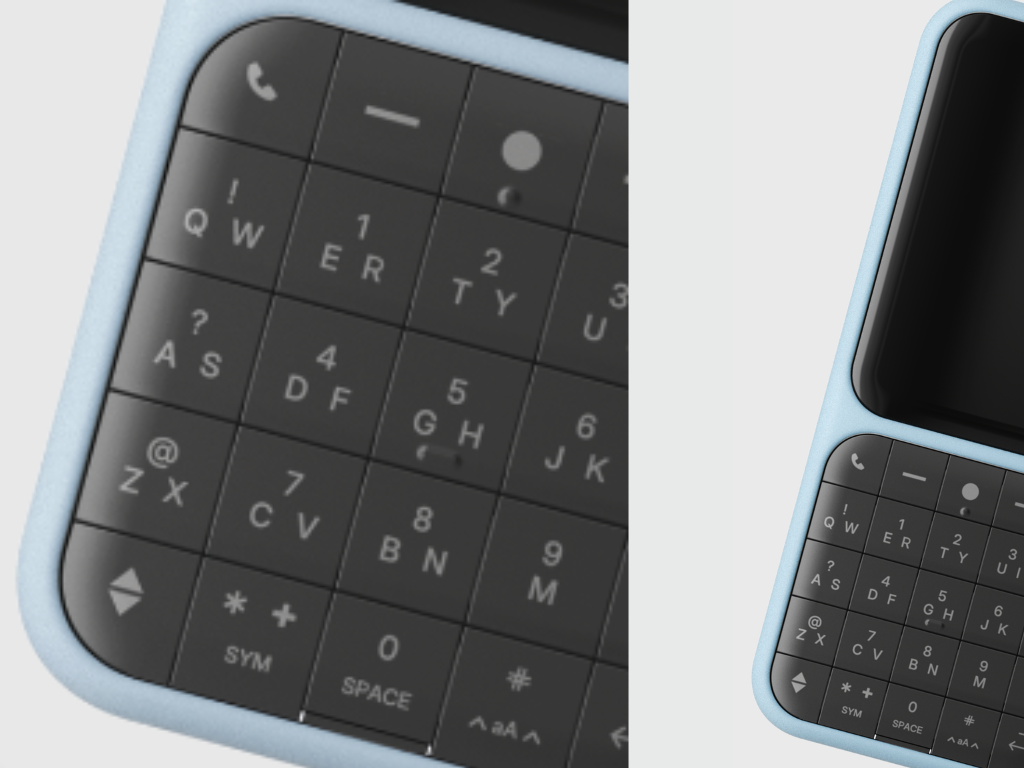
Subsequent early glimpses and promotional leaks circulating within the community reveal that this expansion will hit very close to home for long-time hardware typing enthusiasts. According to coverage from Notebookcheck, Sidephone’s upcoming QWERTY tile opts for a condensed layout reminiscent of BlackBerry’s classic SureType system—popularized by icons like the Pearl 8100 series—pairing a multi-letter key arrangement with intelligent predictive algorithms to maximize speed in a pocketable footprint.
"From the promotional image, the QWERTY tile seems to carry a compact yet familiar layout with tightly packed keys, somewhat reminiscent of older Blackberry SureType designs... mixing predictive typing with a reduced key count."
How It Stacks Up Against True Keyboard Phones
For dedicated hardware keyboard purists, the Sidephone’s approach offers an interesting philosophical compromise. Unlike full-width landscape sliders or dedicated portrait QWERTY powerhouses like the BlackBerry Bold or Unihertz Titan, the Sidephone isn’t designed to power through endless enterprise spreadsheets or rapid-fire Slack threads. Instead, its hybrid modular nature treats physical typing as an intentional choice—a swappable tool you snap into place when you need to answer an email, and pop out when you just want a distraction-free audio controller. For typists who find pure T9 a bit too sluggish but still want compact, pocket-friendly ergonomics, a SureType-style tile might just be the sweetest middle ground in years.
Hungry for more hands-on impressions, teardowns, and hardware mods? Head over to our community forums to share your thoughts on modular handsets, or check out our shop and resource pages to find gear tailored for physical keyboard devotees.